
Etihad Airways Take: Emirates A380 Route Reality
Emirates isn’t chasing splashy superjumbo launches. Here’s why smarter fleet planning, better schedules, and Premium Economy matter more.

Etihad Airways may be the primary keyword here, but the real story is Emirates: despite endless speculation about Emirates A380 new destinations, the airline is mostly making a smarter, less dramatic move. Instead of sending the superjumbo everywhere, Emirates is leaning on A350s and retrofitted 777s while keeping the A380 on routes where it still makes hard commercial sense.
Every few months, the internet convinces itself Emirates is about to send an A380 to any city with a runway and a mildly delusional Reddit thread. People start googling Emirates A380 new destinations like it’s a sneaker drop, and suddenly the energy is less “global airline strategy” and more “grown man refreshing eBay for a Daron Emirates A380 Single Plane.”
Then Emirates announces the actual move and it is an A350.
That is the story. Not the fantasy version. Gatwick, Montréal, Adelaide, Copenhagen, Phuket, Cape Town: a lot of the recent action is A350s and retrofitted 777s, while the A380 stays where it still makes brutal, obvious sense. Big demand. Tight slots. Premium-heavy routes. Places where the plane is not just pretty, it is useful.
And honestly, that is the smartest thing Emirates has done in a while.
I love the A380. Truly. I still get a little embarrassing around one. The upper deck is great, the cabin is weirdly calm, and for a few hours you can almost forget airports are designed by people who hate joy and charge $24 for a sad sandwich. But if you look at what Emirates is actually doing in 2026, the interesting part is not “new superjumbo destinations.” It is that the airline has stopped using the A380 as a hype machine and started using it like a scalpel.
That is less romantic. It is also more intelligent.
Emirates A380 hype vs. what the airline is actually doing
There is a gap right now between what people want and what Emirates is building. People want new A380 routes. Emirates is building frequency, cabin consistency, and Premium Economy at scale.
That sounds less sexy, I know. It is also what real travelers usually care about once they log off.
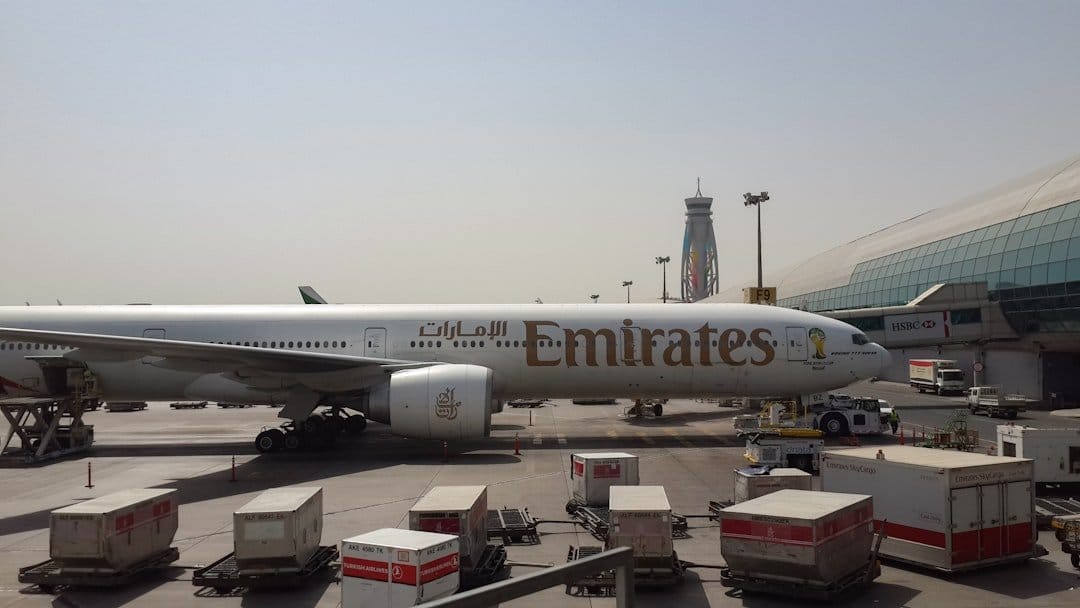
Emirates launched A350 service to London Gatwick in February 2026 while keeping three daily A380 flights on the route. Montréal became the first city in Emirates’ Americas network to get the A350, replacing a 777. That is not Emirates walking away from the A380. That is Emirates saying, very clearly, “relax, we know which tool does which job.”
The A380 is still there. It is just not being dragged into every conversation like the family member who peaked at a wedding in 2014 and still brings it up.
Last month I was in London doing the classic founder thing of pretending I would “work on the plane” and then answering emails from a hotel lobby in yesterday’s T-shirt. In that situation, a fourth daily Dubai-Gatwick frequency with a useful departure time matters more than some random one-off A380 launch to a city I will never fly to. I care about options. I care about not getting trapped in a stupid connection. I care that the seat matches the fare. Basic stuff, capito?
The aviation internet, meanwhile, is still in its fan-fiction era. Same energy as people passionately discussing weird niche stuff like 017 MEM - 747 is alive and then acting betrayed when an airline chooses the aircraft that actually fits the route.
Airlines are not here to make your flight radar screenshots prettier. Sorry to the group chat.
The A380 has entered its luxury-icon phase
I do not mean that as an insult. I mean it with respect.
The Emirates A380 is no longer the expansion story. It is the prestige asset. The thing you keep on routes where demand is reliably huge, airport slots are a mess, and the halo still matters. That is a different role from “go open fresh territory.”
And once you stop being sentimental about it, the map makes total sense.
Gatwick still gets three daily A380 flights even after the A350 was added. Toronto keeps the daily A380. Montréal gets the A350. That is not random. That is Emirates separating “this market can fill the beast” from “this market benefits more from flexibility.”
I love flying the A380 for reasons that have nothing to do with aviation cosplay. It feels calmer. Quieter. Less like being herded through a punishment tube by fluorescent lighting. On long-haul, especially when I am running on espresso, dehydration, and bad life choices, that psychological sense of space matters.
But “special” does not automatically mean “put it everywhere.”
That is not how mature airlines behave. Early on, giant aircraft are symbols. Later, they become precision instruments. Same plane, different phase of life. It is the startup founder arc, basically. At first you want headlines. Then you want margins. One is hotter. The other pays rent.
And yes, a small childish part of me still wants the A380 to be the future. I grew up in Italy when giant engineering still felt heroic. Big trains. Big ships. Big planes. Somewhere in my brain, bigger still whispers better.
My adult self knows that is nonsense. But the child is loud.
The real Emirates story is Premium Economy, not plane porn
If you are paying for your own long-haul flights, the biggest Emirates story right now is Premium Economy rollout. Not aircraft size.
Business Traveller reported that Emirates plans to extend Premium Economy to 99 destinations by the end of 2026. That matters way more than another round of “where will the A380 go next?” discourse. Because the plane is often just the wrapper. The actual product is the seat, the schedule, and whether your second leg ruins your mood.
That is where Emirates is being smart.
By July, the airline said retrofitted A380s, 777s, and A350s would operate on more than 84 routes. Read that again and the strategy becomes painfully obvious: this is not an A380-only luxury plan. It is a network-wide cabin plan, and the A350 is doing a lot of the heavy lifting because it gives Emirates room to expand without hauling around superjumbo economics where they do not belong.
Take Gatwick. The A350 frequency adds 28 Premium Economy seats, 32 lie-flat Business seats, and 238 Economy seats. That is not some sad compromise. That is good inventory design. More useful seats, more schedule choice, less need to throw an A380 at every extra frequency like confetti at an Arab wedding.
And for actual humans, consistency matters more than drama. One nice segment followed by one depressing segment is how airlines lose goodwill. Great seat to Dubai, then a mystery box afterward? Horrible. Emirates’ all-widebody model helps here. It can roll out a more consistent premium product across connections in a way a lot of airlines simply cannot.
That is not as cinematic as an A380 water-cannon salute. It is better.
My hot take: premium travel is not really about bragging rights anymore. It is about reducing friction. I would rather leave at the right time, keep a decent seat, and avoid product roulette than spend 12 hours congratulating myself because the plane was physically larger.
My nonna would say this is what is wrong with modern people. Too much optimizing, mai contenti. She also packed sandwiches for a two-hour drive, so frankly she understood travel better than most airline executives.
Why the boring move is usually the right move
One of the least glamorous truths in aviation is that frequency often matters more than flash.
The new Gatwick A350 service brings Emirates to 87 weekly flights across Heathrow, Stansted, and Gatwick, and 146 weekly flights to the UK overall, including 90 to London. That is not the kind of thing that makes aviation Instagram black out from excitement. It is, however, extremely useful if you are a person with a calendar.
The evening Gatwick departure was introduced to improve options for both business and leisure travelers. Corporate wording, sure. But translated into human language: more people can leave at a sane time, connect better, and avoid wrecking an entire day around one flight.
That is value. Real value. Not collector-toy value.
This is the same mistake people make in tech. Early-stage companies love flashy features because they demo well. Mature companies win by removing friction. Better defaults. Better timing. Fewer weird clicks. Less chaos. Same thing here. A fourth daily London flight with the right aircraft and cabin mix is a much stronger move than launching some random A380 route just to get 48 hours of attention.
A lot of airline coverage still gets distracted by giant metal and misses the operational stuff that actually changes the trip. The future of aviation news is probably going to look more like EasyJet drone maintenance than endless worship of iconic aircraft. Less cinematic, more useful.
I get why that feels less fun. It probably is less fun.
It is also how serious businesses operate.
Will there be new Emirates A380 destinations? Probably. But that is not the bet.
Yeah, I am sure there will be some new Emirates A380 destinations eventually. On the right route, the plane still makes total sense: slot-constrained airports, heavy premium demand, giant tourism flows, huge connection banks through Dubai. No mystery there.
But if you asked me where the real growth story is, I would put my money on A350s and retrofitted 777s without blinking.
That is where the flexibility is. That is where Premium Economy scales. That is where Emirates can grow without pretending every market needs a superjumbo entrance like it is arriving at Cannes after three negronis and a PR team.
And compared with everyone else, Emirates is still playing a pretty unusual game. Etihad Airways has its own premium strategy, of course, but Emirates has scale that almost nobody can touch. Qantas also treats the A380 like a flagship weapon, not a universal solution, which feels sane. There is basically no A380 for United, and never really was, which tells you how weirdly specific the Emirates model has always been.
The broader industry conversation is moving too. People still obsess over iconic aircraft, but the future-facing debates are increasingly about automation, operations, and cost. Stuff like the FAA pilotless plane conversation, not just bars on the upper deck. Same reason niche stories like EasyJet drone maintenance keep popping up. The romance is still there, but the money is moving toward efficiency.
Which is exactly why Emirates’ strategy works. Keep the halo where it still prints money. Modernize everything else.
That is the move.
The better question
Maybe the better question is not “what are the next Emirates A380 new destinations?”
Maybe it is why so many of us still use aircraft size as a shortcut for travel quality.
If Emirates keeps giving people better schedules, better cabins, and fewer unpleasant surprises through A350s and retrofitted 777s, then the A380 becomes what luxury usually becomes in a mature market: not the default, but the statement piece. The icon. The thing you save for where it still lands like a mic drop.
I am fine with that.
I will still board an A380 tomorrow and grin like an idiot. Obviously. I am not made of stone.
But vibes do not run an airline. And the carriers that figure that out first are the ones still standing when everyone else is busy arguing over the world’s fanciest dinosaur.