
Interesting Trends in Europe Beyond the AI Hype
Europe’s most important shifts aren’t in AI headlines but in labor, confidence, trust, and cross-border coordination.
Everyone wants to talk about Europe and AI like it’s one long dinner party argument between a lawyer, a regulator, and a guy from VC who says “compute” too much. Fine. But the most interesting trends in Europe right now are hiding in the boring stuff — labor markets, household confidence, financial literacy, public health coordination, cross-border trust. Which is annoying, because “boring stuff” is usually where the real story is.
My hot take is simple: Europe does not have an AI problem. It has a coordination problem.
I say that as someone who ping-pongs between the US and Europe all the time, talks to founders in Milan, Berlin, Paris, Amsterdam, then lands in New York and hears the same lazy investor line: “Europe is good at rules, bad at building.” Cute. Also lazy. Europe has talent, research, industrial depth, public institutions, and a market of roughly 450 million people. What it does not have — at least not consistently — is the instinct to act at the scale it already has.
If you want European AI sovereignty, stop staring only at AI headlines. Start looking at the machinery underneath: who can work, who can move, who feels safe enough to spend, who trusts the system, and whether Europe can respond to cross-border risk like a real union instead of a family WhatsApp with 27 admins and one guy sending voice notes.
That’s the real movie.
And honestly, it’s better than another panel about foundation models.
Interesting Trends in Europe Start With the Labour Market
One of the most interesting trends in Europe right now is the labor market. I know. Riveting. Please hold your applause.
But this actually matters. A lot. In a blog published on 9 March 2026, the ECB pointed to a pretty unusual mix in the euro area: unemployment near record lows, while wage growth is cooling. That’s not the standard “everything is overheating” story. It suggests labor supply is widening.
The ECB points to immigration, higher labor-force participation, underemployment, and lower job-switching. Which, if you squint for two seconds, is basically AI policy in disguise. More available workers. More participation. More ability to hire. More capacity to scale teams across engineering, sales, compliance, operations — all the unglamorous stuff that turns a cool demo into an actual company with payroll and deadlines and someone arguing about CRM hygiene.
Europe says it wants its own AI champions. Bene. Then stop treating immigration and labor mobility like weird side quests nobody wants to touch politically.
You cannot ask for a European OpenAI, Mistral, or DeepL while making it harder for talent to move around the continent. That’s not strategy. That’s self-sabotage with paperwork. If your population is aging, your firms need specialized skills, and labor shortages are real, then migration and cross-border mobility are not cultural footnotes. They are industrial policy. Full stop.
This part is personal for me. I grew up Italian. Europe was never some abstract Brussels concept. It was cheap flights, Erasmus chaos, friends scattered across three countries, one currency making the whole thing feel psychologically real. A continent this fragmented cannot compete with the US and China if it keeps treating talent like a national possession instead of a shared strategic asset.
Mario Draghi said it in central-banker language in his September 2024 competitiveness report for the Commission: Europe is stuck in a loop of low investment and low innovation. He’s right. One way out is more labor dynamism at continental scale.
And the old stereotype that Europe is rigid? It’s getting stale. The ECB’s March 2026 analysis suggests the labor story is changing under our noses. If labor availability is broadening even while job-switching slows, that can actually help companies build with more stability instead of playing the usual founder game of poaching the same twelve people in Berlin Mitte while everyone eats sad desk salads and calls it a talent strategy.
I saw this in Lisbon not long ago. I had coffee with a founder building AI tools for logistics, and his main complaint was not regulation. It was trying to hire across multiple EU countries without every national system behaving like it had just discovered email. The talent existed. The demand existed. The friction was institutional. Very European, and not in the charming aperitivo way.
So yeah, I get impatient when people reduce AI to model performance or legal text. If Europe can function like one talent market, it has a shot. If it keeps acting like 27 medium-sized countries politely competing to be underpowered, it will keep exporting talent and importing platforms.
And yes, I’ll say the impolite version too: euroskeptics who attack mobility while demanding competitiveness are selling fantasy. Europe does not get stronger by shrinking its own labor pool on purpose.
That’s not sovereignty. That’s cosplay.
Europe Has a Confidence Problem, and It’s Showing Up in the Economy
Founders hate this part because we all want to believe innovation runs on vision, espresso, and a mildly alarming sleep schedule. But household psychology matters.
A lot.
According to the ECB’s Consumer Expectations Survey released on 27 February 2026, euro area households are still adjusting to inflation, housing pressure, and tighter credit conditions. Credit demand has softened. Which sounds technical and boring until you translate it into normal human language: people are still cautious.
And when households feel cautious, whole economies start acting smaller than they are.
People delay borrowing. They put off big purchases. They get nervous about changing jobs, starting companies, moving cities, retraining, taking risk. Politicians feel that mood instantly and become allergic to anything that looks like a long-term bet. Suddenly investment in compute, energy, semiconductors, or public digital infrastructure gets treated like a luxury instead of the cover charge for staying relevant.
Europe doesn’t just need more venture capital. It needs more everyday confidence.
That sounds soft if you’ve spent too much time around startup people. It isn’t. If families feel squeezed, they become politically risk-averse. Risk-averse societies do not back moonshots. They do not tolerate patient capital. They do not support the kind of spending required to build continental tech infrastructure unless the upside feels real and close enough to touch.
This is why the single market still feels unfinished in the most expensive possible way. On paper, Europe is huge. In real life, too many households still experience it through national bottlenecks: fragmented housing markets, uneven credit conditions, different savings cultures, and the lingering feeling that shocks are local even when the causes are obviously continental. It’s like owning a Ferrari and only driving it in first gear because the passengers won’t stop fighting over the playlist.
Christine Lagarde put it plainly in a speech at the European Parliament on 30 September 2024: Europe has to act together if it wants to preserve prosperity and security in a world shaped by geopolitical uncertainty and technological change. Exactly. Prosperity is not just a chart. It’s whether people feel solid enough to support change without panicking every time the mortgage resets.
I used to underestimate this, to be honest. Very founder-brain behavior. I thought if Europe just got more ambitious founders and more capital, the rest would sort itself out. Then I watched smart friends in Italy and Spain delay perfectly rational decisions because rent was up, mortgages were nasty, and nobody trusted the next six months enough to make a leap. That’s not a motivation issue. That’s a systems issue.
A stronger single market and deeper capital-markets integration are not niche Brussels hobbies for people with too many navy suits. They are how Europe creates the baseline confidence that makes innovation feel plausible instead of theatrical.
If households feel small, Europe builds small.
Nobody likes that sentence because it’s true.
Financial Literacy Sounds Boring Until You Realize It’s Basically Tech Policy
Financial literacy is one of those topics people treat like a side panel at 4:45 p.m., right before everyone sneaks out to “take a call.” Huge mistake.
In an ECB press release on 2 March 2026, Christine Lagarde launched the EuroSteps Walking Challenge as part of a push around women’s financial literacy and economic resilience. Yes, a walking challenge. Deeply earnest. Extremely European. Also smarter than it sounds. It’s a sign that institutions are trying to make financial capability public, social, and easier to spread across borders.
That matters because financial literacy shapes who invests, who starts companies, who survives downturns, who trusts digital financial tools, and who gets quietly locked out of the upside. If Europe wants broader participation in capital markets and digital services, it cannot keep treating economic literacy like optional homework people ignore until tax season and then cry.
The gender angle matters too, and not just because fairness matters. It matters because competitiveness matters. If a huge chunk of the population has lower financial confidence and lower economic resilience, Europe is literally underusing its own capacity. On a continent that never stops complaining about productivity, that’s insane.
Lagarde has been consistent here. The ECB framed women’s financial literacy and resilience as a real policy issue, not some decorative campaign. Good. Because if Europe wants people to trust AI-driven financial services, digital identity systems, cross-border investment products, and retirement tools, trust has to start with comprehension. People do not trust what they do not understand. Revolutionary, I know.
This is one of those areas where Europe should lean fully into its federal instinct. Build the tools once. Make them multilingual. Distribute them across borders. Stop reinventing the same mediocre national program 27 times with different logos and slightly different PDFs. My nonna would probably accuse me of becoming too pro-Brussels, which would be fair, but on this one I’m right.
I think about this a lot: who gets to feel like tech is for them? In the US, for all its chaos and weirdness, there’s a stronger cultural link between risk and reward. In Europe — especially parts of the south — people are often taught stability first, upside maybe later, and usually only if your uncle knows a guy at the bank. I’m joking. A little.
But the point stands. If we want more founders, more retail participation, and more democratic support for innovation, we need citizens who can actually read the system they’re inside.
That’s one of the interesting trends that matters way more than it sounds.
Europe Finally Learned That Cross-Border Threats Are Real. Good. Now Apply That to Tech.
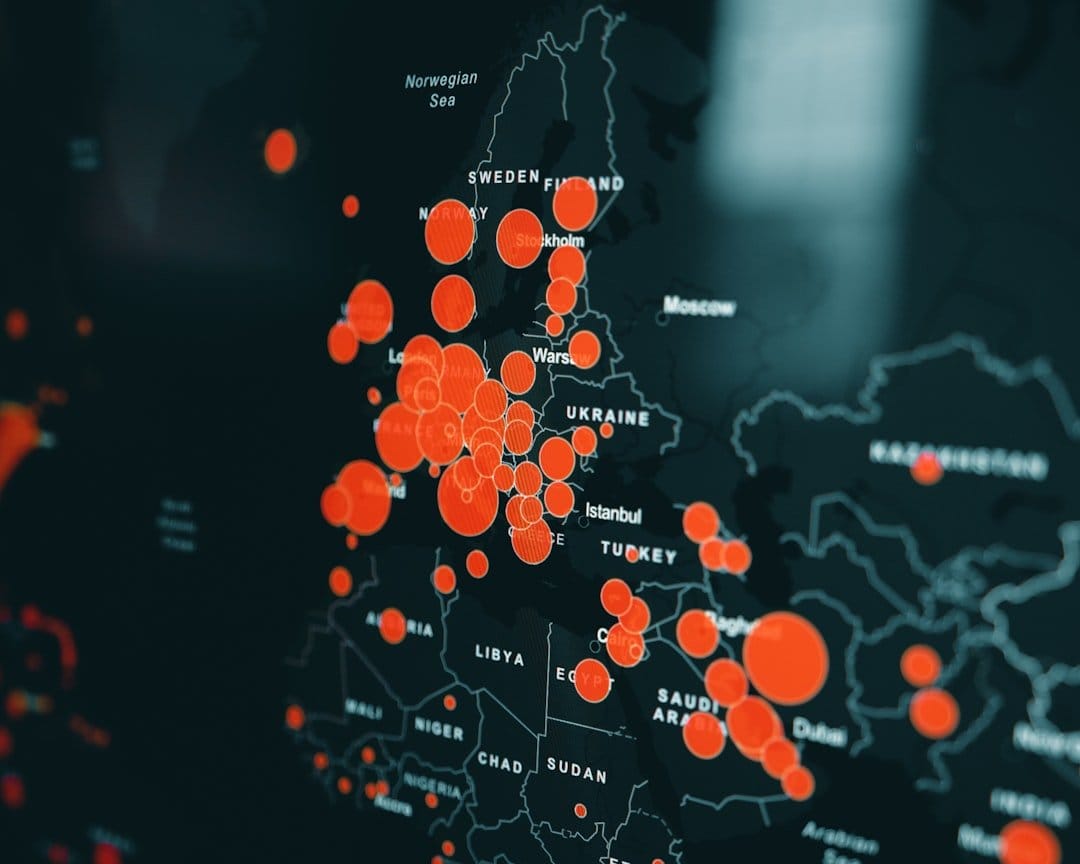
One of the smartest things Europe has done in recent years is admit that some threats are obviously post-national. Viruses do not care about borders. Cyberattacks do not care about borders. AI-era systemic risk will not care either.
According to the ECDC’s Weekly Communicable Disease Threats Report for week 10 of 2026, the EU is still maintaining a Europe-wide view of cross-border health risks, with rapid monitoring of imported and emerging threats. That’s not just pandemic cleanup. It shows that health surveillance has become a standing strategic function instead of a temporary panic hobby.
That is exactly the mindset Europe needs for AI and tech capacity.
Not another summit. Not another glossy strategy deck. Not another room where someone says “ecosystem” fourteen times and nobody ships anything. Shared monitoring. Shared infrastructure. Shared response capacity. You do not get strategic autonomy by publishing PDFs. You get it by building operational muscle.
This is where the federalist case becomes hard to dodge. If Europe accepts that disease surveillance has to be coordinated above the nation-state, why is it still so hesitant about common capacity for compute, cloud infrastructure, semiconductor strategy, model evaluation, and public-interest deployment? Same problem. Same scale mismatch. Same answer.
Ursula von der Leyen said in her 2024–2029 political guidelines that the next five years have to be a period of bold action and investment. Correct. Europe has diagnosed itself enough. We know the fragmentation tax is real. We pay it every day.
And the next generation of resilience is going to be messy and blended. Health, cyber, economic security, disinformation, AI systems — these categories bleed into each other. A ransomware attack on a hospital is not “just cyber.” A weak disease-monitoring system with bad data-sharing is not “just health.” An AI model used in critical infrastructure is not “just tech.” Bureaucracies love neat boxes. Reality absolutely does not.
I’m not saying everything needs to be centralized in Brussels, calma. I am saying the union needs common instruments with real teeth: shared compute procurement, cross-border data capacity, pan-European testing standards that actually work in practice, funding mechanisms that don’t require founders to become part-time archaeologists just to figure out which EU program applies to them.
Europe loves a panel discussion.
What it needs is more operational courage.
Public Opinion Is Ahead of the Politicians, Which Is Honestly On Brand
The interesting trends in European public opinion are not subtle. People are not thinking in tidy policy categories. They are worried about affordability, cities getting harder to live in, weak services, investment, resilience, security — all at once, like normal people with rent to pay and trains to catch.
According to the European Parliament’s March 2026 Eurobarometer briefing, EU institutions are tracking concerns around urban pressure, investment, and social issues across the bloc. Good. Because that’s how life actually works. Nobody wakes up and says, “Today I will experience housing policy separately from productivity policy and totally unrelated to digital infrastructure.” Life is not modular. Policy keeps pretending it is.
This is why I think Europeans are more ready for practical federalism than a lot of national politicians want to admit.
People already live cross-border economically, culturally, and digitally. They compare prices across countries, move for work, stream the same nonsense, deal with the same inflation shock, get trapped by the same platform dynamics, and increasingly expect institutions to understand the whole picture. The political class, as usual, is the last to get the update.
So when pro-European leaders argue for deeper integration, I don’t hear dreamy idealism. I hear people correctly reading the room. Euroskeptics keep offering nostalgia on a continent that desperately needs scale. That sounds harsh, but come on. What exactly is the plan otherwise? Pretend the future will politely reorganize itself around national comfort zones?
Enrico Letta made the case in his April 2024 report Much More Than a Market: Europe needs to finish the single market in finance, energy, telecoms, defense, the lot. He was right then. He looks even more right now. The public mood is not asking for less coordination. It’s asking for coordination that actually works.
That’s the opening for a real EU tech agenda. Not AI for AI’s sake. Not “look, we wrote a strategy document.” I mean AI tied to health systems, public services, housing efficiency, industrial productivity, education, logistics, energy, small-business growth. Make it useful. Make it visible. Make normal Europeans feel the upside in their actual lives.
That’s how you build political durability.
Not by lecturing people about innovation while their rent is up and their city feels less livable every year.
Europe Should Stop Acting Shocked That the Future Is Cross-Border
The next European champion probably won’t come from a flashy speech about innovation. It’ll come from the continent getting serious about the stuff nobody screenshots from policy decks: labor mobility, household resilience, public trust, shared surveillance, financial capability. That’s the foundation. Ugly, practical, essential.
I believe this more every time I bounce between the US and Europe. America is better at hype. Europe is better at building institutions that last. The trick — the whole trick — is turning that institutional depth into speed, scale, and confidence. Not abandoning the European model. Updating it so it can actually move.
So yes, I care about the AI Act. I care about model governance, compute access, safety, and competition policy. But if that’s all we talk about, we’re missing the plot. The most interesting trends are the ones showing that Europe already functions like one system in the ways that matter — labor, finance, risk, public sentiment — while policy still too often behaves like 27 separate group chats trying to pick a restaurant.
That gap is the bottleneck.
And here’s the question Europe keeps dodging: does it want to regulate the future from the sidelines, or build it together?
Because I’m very done with the fake choice between European values and European power. We need both. A more federal, more coordinated, more ambitious Europe is not some romantic side project for people who still miss Erasmus. It’s the only version of Europe that has a real shot at producing its own AI economy.
Not because it sounds nice.
Because arithmetic is a brutal little thing.