
Ancient Octopus Fossil Was Really a Nautiloid Fake
A famous 300-million-year-old “octopus” fooled scientists, Guinness, and textbooks until tooth counts and new scans exposed the impostor.
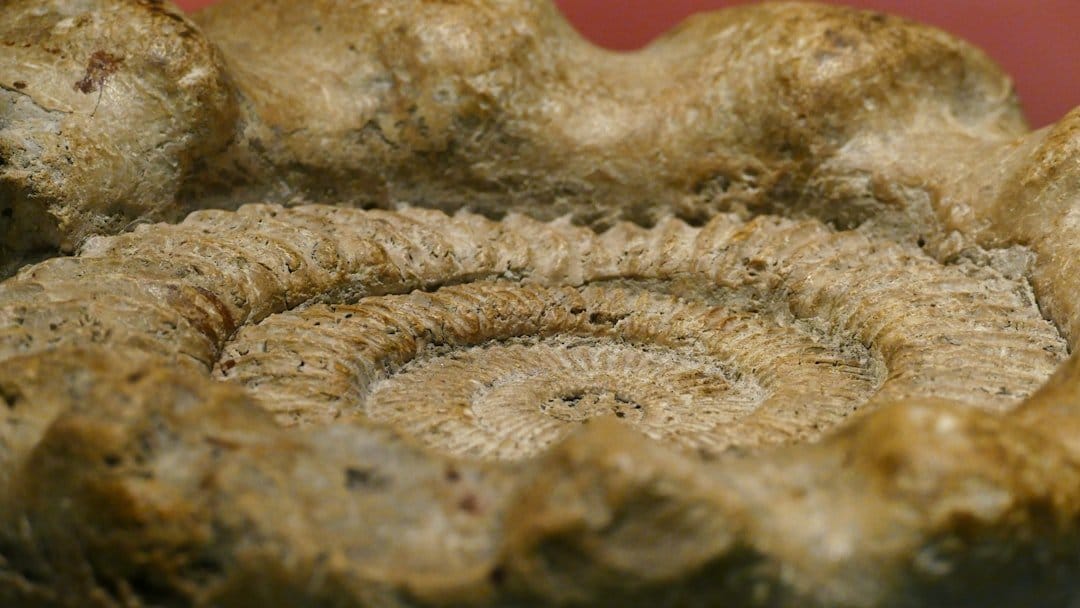
The “world’s oldest octopus” had too many teeth. That’s it. That’s the whole scandal.
I’m obsessed with this story because World’s oldest octopus fossil exposed as a nautiloid impostor sounds like a joke somebody made up after two Negronis, but it’s real, and somehow better than the original myth. For about 25 years, a fossil called Pohlsepia mazonensis strutted around as octopus royalty: described as an octopus in 2000, picked up by Guinness World Records, used in molecular clock studies, the whole thing. Then researchers came back with better imaging, looked inside the blob properly, and found the detail that wrecked the fantasy: the radula had too many teeth for an octopus.
Bellissimo. Absolute cinema.
And no, the lesson here is not “lol scientists were wrong.” That’s the cheap internet take. The real lesson is that a sexy story can survive for a long time when everyone kind of wants it to be true. “Oldest octopus ever” is a great museum label. “Decomposed nautiloid soft tissue from the Late Carboniferous” is not exactly moving merch in the gift shop.
Still true, though.
A Guinness record just got humbled
The fossil came from Mazon Creek, Illinois, and dates to the Late Carboniferous, roughly 311 to 306 million years ago. That age is what made people lose their minds in the first place. If it really had been an octopus, it would have pushed octopus origins way back in time, far earlier than the rest of the fossil record comfortably allowed.
That kind of outlier is irresistible. Scientists are human. Put a weird, ancient, octopus-looking thing in front of people and someone is going to fall in love with the dramatic interpretation.
The correction landed on April 8, 2026, in Proceedings of the Royal Society B. According to reporting from the University of Reading, AP, Smithsonian Magazine, and others, the new study argues that Pohlsepia mazonensis wasn’t an octopus at all, but a nautiloid relative, basically on the Nautilus side of the cephalopod family tree, not the octopus side.
Which means Guinness had a problem.
The funniest quote in this whole saga came from Guinness World Records senior managing editor Adam Millward, who told Smithsonian Magazine:
We will be resting the original title.
Resting. Incredible phrasing. Very elegant. Very British. Very “our record was nonsense and we’d like to exit the room without making eye contact.”
What I love is how quickly a big, shiny fact can become furniture. Once Pohlsepia got the label, the label started doing work. According to the study’s Dryad summary, it became a calibration point in molecular clock studies and a textbook example of a phylogenetic fuse, meaning a lineage seems to have originated long before its fossil record really shows up.
That is a lot of influence for one suspicious blob.
Why this fossil fooled people for so long
Because it looked like an octopus. Sort of. In the cursed way dead things sometimes do.
According to Dr. Thomas Clements of the University of Reading, the fossil was probably a nautiloid relative that had been decomposing for weeks before burial, and that decomposition is what made it look so octopus-like. Which is such an important detail, because fossils are not clean snapshots of ancient life. They’re damage. They’re compression, decay, chemistry, missing parts, weird preservation, and a lot of educated guesswork.
Or, as Clements put it in AP:
It’s a very difficult fossil to interpret. To look at it, it kind of just looks like a white mush.
Honestly? Respect. More scientific papers should admit when the star specimen is basically ancient mozzarella.
The fossil is about the size of a human hand, from the Mazon Creek area southwest of Chicago, and people thought they could see eight arms, fins, and other octopus-ish features. I get it. If you hand me a 300-million-year-old blob with eight appendage-looking structures, I’m not going to be the genius in the room calmly saying, “Have we considered prolonged decomposition of a shell-bearing cephalopod?” I once confidently misread a menu in Lisbon and ordered tripe by accident. We all have limits.
But that’s the trap. Preservation doesn’t just hide anatomy. Sometimes it creates a story. In this case, the decay likely erased or obscured the shell-related clues that would have pointed toward nautiloid, leaving behind a body plan weird enough to invite the octopus reading.
Decay edited the evidence, and people filled in the rest.
How tooth counts blew up the octopus claim
This is my favorite part. A world record died because someone counted tiny fossil teeth.
The team used synchrotron imaging, which sounds like something Marvel made up, but is very real and extremely intense. AP described it as using fast-moving electrons to generate beams of light brighter than the sun. Imagine being a fraudulent octopus and getting exposed by sun-level light. Brutal.
Inside the rock, the researchers found a radula, a ribbon-like feeding structure covered in teeth, common in mollusks. That was the giveaway. According to the University of Reading release and ScienceDaily, the radula didn’t match octopus anatomy.
Here’s the number that matters: octopuses have seven or nine teeth per radula row. Pohlsepia had at least 11. Nautiloids typically have around 13.
So no, it wasn’t a perfect match to a modern nautilus. But it was very much not an octopus.
Clements said it perfectly in AP:
This has too many teeth, so it can’t be an octopus.
No TED Talk voice. No “revolutionizing our understanding.” Just: count again, ragazzi.
The teeth also resembled those of Paleocadmus pohli, a fossil nautiloid from the same region, according to AP and the Washington Post. That’s when the story stops being a vibe and becomes a case file. Hidden radula. Wrong tooth count. Local match. Done.
Reality is annoyingly specific like that. Huge narratives fall apart on tiny details. Not because science is weak, but because the truth usually lives in the stuff people skip over when they’re busy falling in love with a headline.
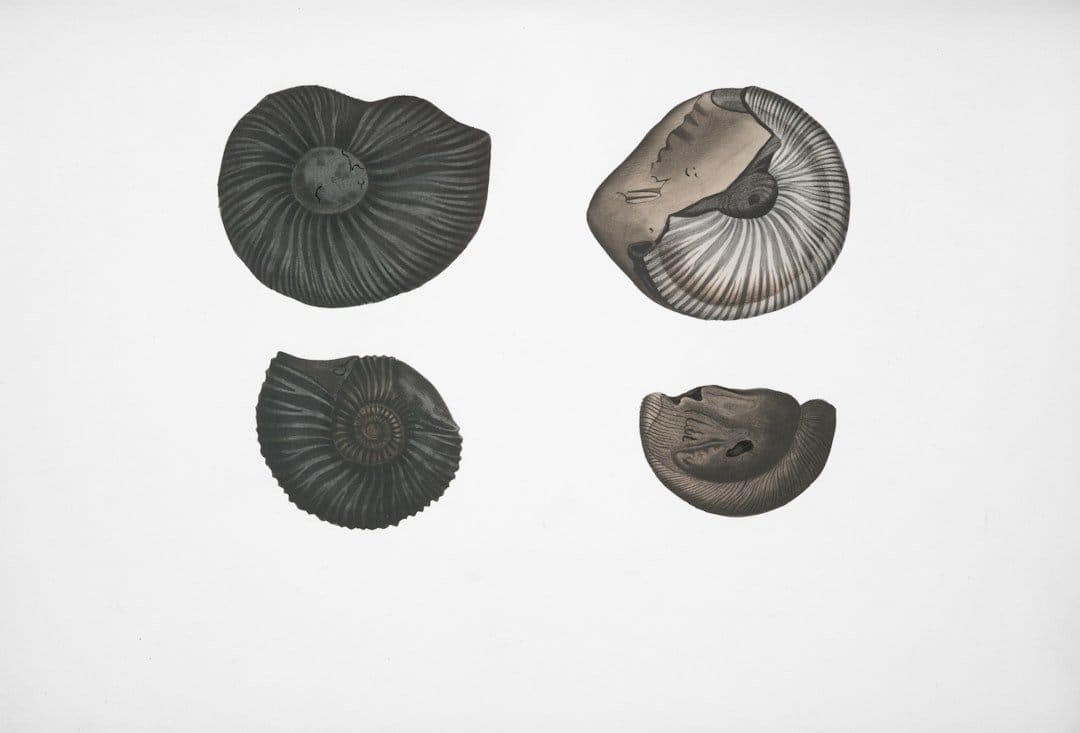
Why paleontologists were side-eyeing it anyway
Even before the new imaging, Pohlsepia mazonensis had a giant problem: the timeline made no sense.
According to AP, the next oldest known octopus fossil is only about 90 million years old. If Pohlsepia were really an octopus, you’d be staring at a gap of roughly 150 million years between this one celebrity fossil and the rest of the record.
That’s not a cute little discrepancy. That’s a canyon.
Clements told AP:
It’s a huge gap.
Exactly. One fossil showing up absurdly early can mean you’ve found something revolutionary. It can also mean you’ve found the paleontology version of a guy on Hinge claiming he’s 5'11" and “basically 6 foot.”
This is why skepticism matters. According to the University of Reading release, researchers had doubts about Pohlsepia for years, but there wasn’t a clean way to test them. That part gets lost when people talk about science like it’s a simple march from discovery to certainty. A lot of the time, the question is already there. What’s missing is the tool.
And meanwhile the fossil kept accumulating status. The Dryad summary notes that this single specimen helped support a Palaeozoic origin for octobrachians in molecular-clock work. So it wasn’t just a weird museum object with a dramatic label. It was shaping bigger evolutionary narratives.
I’ve seen this exact pattern outside science. In startups, especially. One flashy claim gets repeated because it’s elegant and useful and sounds smart at dinner, and then suddenly everyone cites everyone else until the idea becomes furniture. Nobody wants to be the person asking if the furniture is fake.
Then one day somebody checks the teeth.
It is still an extremely important fossil
This is the part I think people miss. Pohlsepia didn’t become boring once it lost octopus status. It became, in some ways, more interesting.
According to the University of Reading release and coverage from the Natural History Museum, the fossil now represents the oldest known soft-tissue preservation in a nautiloid. The NHM says this pushes that record back by around 220 million years.
That’s enormous. Not “nice little correction” enormous. More like “we just blew up the old benchmark” enormous.
Dr. Imran Rahman, quoted by the Natural History Museum, said:
While Pohlsepia might not be an octopus, it’s still a very important fossil preserving the kinds of soft tissues we don’t normally get in the fossil record.
Exactly. The clickbait crown is gone. The scientific value is not.
And nautiloids are not some consolation prize. Modern nautiluses are often described as living fossils, and the Natural History Museum notes that only nine species survive today. So a fossil preserving soft tissue from a nautiloid relative is a rare window into anatomy that almost never survives deep time.
This is where I get a little spicy: the internet has trained people to hear “debunked” and think “irrelevant.” Terrible habit. Sometimes a correction doesn’t make the thing less important. It just strips away the dumb headline and leaves the actual treasure.
“Not the oldest octopus” is worse for trivia night. Fine. But the Dryad summary describes it as the only unequivocal evidence of nautiloid soft tissue in the Palaeozoic fossil record. If you care about how life evolved, that is wildly cooler than some fake superlative.
Why this correction makes science look better
Every time a story like this comes out, someone does the smug routine: see, scientists keep changing their minds. As if that’s a flaw. As if the better system would be refusing to revisit a famous claim because it already made the textbooks.
No grazie.
This fossil fooled people for a quarter century. Then researchers came back with stronger tools, including synchrotron micro-X-ray fluorescence elemental mapping, per the Dryad record, and found structures hidden in the rock that earlier work couldn’t resolve. That is exactly what science is supposed to do. Not protect old narratives. Test them again when better evidence becomes available.
It matters that this happened at Mazon Creek Lagerstätte, one of the most famous fossil sites in North America, known for exceptional Carboniferous preservation. The study authors explicitly say these methods could help re-evaluate other fossils from the site too. Which is the real spicy takeaway. This might not be the last beloved label to get wrecked by a second look.
Good.
I mean that. Good. Somewhere in a museum drawer, there is almost certainly another specimen that people got a little too comfortable with. Then one stubborn person with better hardware and a mildly deranged attention span is going to reopen the case and ruin everyone’s favorite fun fact. I support this fully. Please keep doing it.
Because the alternative is fake certainty, and I’ve had enough of that in basically every industry. I’ve built startups. I’ve pitched investors. I know how seductive confidence theater can be. But the smartest rooms I’ve ever been in, the ones worth trusting, are the rooms where someone is willing to say, actually, let’s check again.
That sentence has saved more truth than swagger ever will.
So yes, World’s oldest octopus fossil exposed as a nautiloid impostor is a fantastic headline. Guinness drama. Hidden teeth. A 300-million-year-old identity crisis. Perfect over-drinks material.
But the best part is this: the fossil didn’t stop being extraordinary when it stopped being an octopus. We just briefly revealed how addicted we are to crowns, records, and neat little labels. Reality, as usual, is messier and better. Sometimes the biggest discovery isn’t a new monster crawling out of the rocks. Sometimes it’s an old blob in a drawer, waiting for one patient nerd to count to eleven.
Sources
- Primary trending article
- ‘Oldest octopus’ fossil is no octopus at all, scans reveal
- ‘World’s oldest octopus’ fossil isn’t an octopus after all
- This Fossil Held the World Record for the Earliest Known Octopus. Turns Out, It's Not an Octopus After All
- 300-million-year-old sea creature loses title as world's oldest octopus
- Scientists say the world's oldest octopus fossil isn't an octopus after all